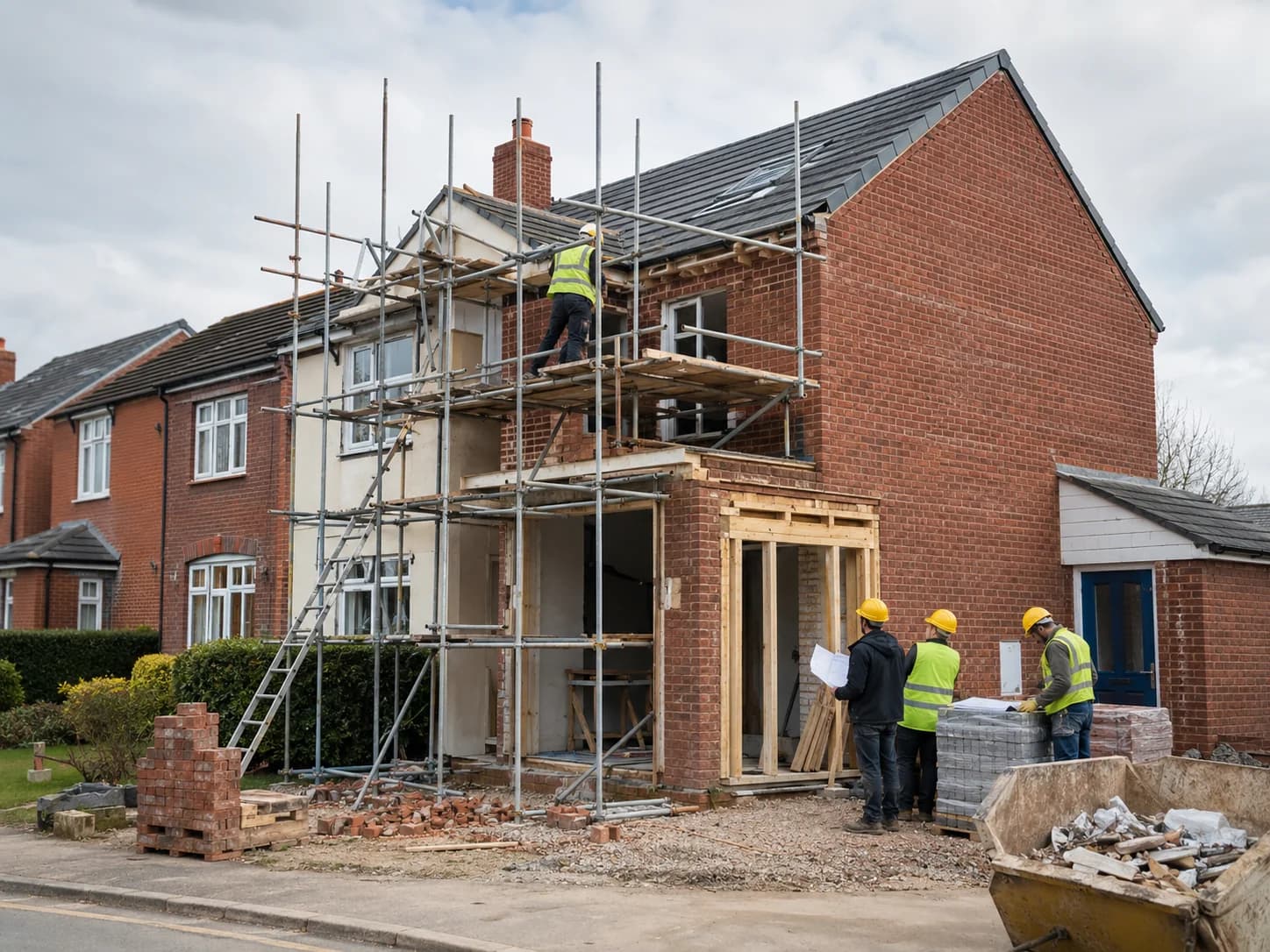
Rebuild cost vs market value.
These two figures are often assumed to be the same. They rarely are, and mixing them up is the single most common reason UK homes are wrongly insured.
Two questions, two different answers.
Market Value
Answers "what could I sell it for?" - driven by land, location and demand.
Rebuild Cost
Answers "what would it cost to rebuild?" - driven by construction cost per m² and materials.
No Reliable Shortcut
The two can diverge in either direction depending on the property - only a proper assessment tells you which.
Set side by side, the difference is clear.
| Market Value | Rebuild Cost | |
|---|---|---|
| Answers the question | "What could I sell it for?" | "What would it cost to rebuild it?" |
| Includes the land? | Yes | No |
| Driven by | Local demand, comparable sales, location | Construction cost per m², materials, labour, demolition, fees |
| Used for | Selling, buying, mortgage lending decisions | Setting your buildings insurance sum insured |
| Who calculates it | Estate agent, RICS valuer (for sale/mortgage) | RICS surveyor using BCIS rebuild cost data |
| Typical London example | £800,000 | £350,000 |
Answers the question
Includes the land?
Driven by
Used for
Who calculates it
Typical London example
In central London and other high-value areas, land often makes up well over half of a property's asking price, so the rebuild cost usually comes out much lower than the market value. In some rural or listed properties, it's the other way round: heritage materials and traditional building methods can push the rebuild cost above the market value. There's no reliable rule of thumb, either way. It comes down to the individual property, which is exactly why a proper assessment matters.
Getting this wrong costs you either way.
Insure at market value when it's higher than the rebuild cost, and you end up paying premium on cover you could never actually claim, because insurers only ever pay out what it costs to rebuild, never the market price of the land.
Insure below the true rebuild cost, and you're underinsured. That means any claim, not just a total loss, gets reduced under the insurer's average clause. See exactly how that works in What Happens If My Property Is Underinsured?
The trusted choice for homeowners.
RICS Regulated
Every assessment is carried out by or under the supervision of a RICS-registered member.
Fully Insured
Every instruction is covered by comprehensive professional indemnity insurance for your protection.
24-Hour Response
We respond to every enquiry within 24 hours and deliver on the timescales we agree.
Insurer-Ready Report
A clear, defensible figure accepted by every UK insurer and broker, without amendment.
Related homeowner guides

What Is an RCA?
A plain-English explainer - what it is, and why it's not the same as market value.
Read the guidearrow_forward
Do I Need One?
The specific situations that mean it's time to get an assessment.
Read the guidearrow_forward
How Much Does It Cost?
What determines price, and how to get a fixed quote.
Read the guidearrow_forwardCommon questions.
Common questions homeowners ask when comparing rebuild cost and market value.